Table Of Content
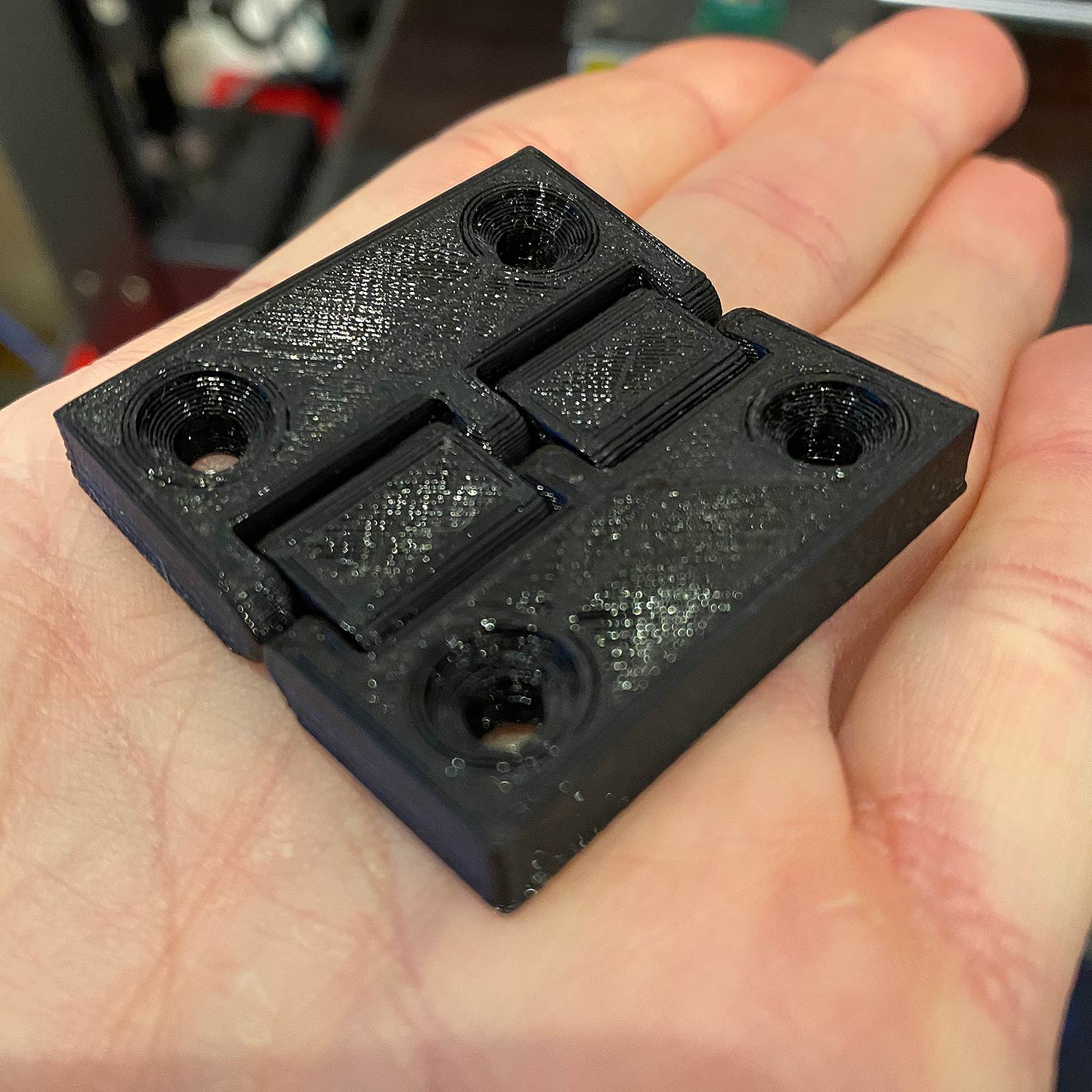
Our team is more than happy to answer any questions you may have about hinges and how they can fit into your application to create great end user experiences. Detent hinges function by using a metal or an elastomer spring component that exerts force inside the hinge, providing the detent. Detent hinges can provide hands-free access to users with a variety of positioning torques for different applications.
Using Coiled Spring-pin Hinges
For example you could add glass fiber to increase tensile strength or add Perl flakes for a metallic appearance. Additives like Glass, talc and fiber may negatively impact the durability and functionality of your hinge design. It is not suggested to use any fillers and if it is determined to be necessary then it is suggested to R&D the hinge with a prototype mold. It’s a good idea to radius sharp corners when designing for injection molding. It’s even more imperative to radius sharp corners in and around the living hinge. Eliminate assembly and lower cost – Plain and simple this is the biggest advantage of a living hinge.
Importance of a Living Hinge Design
Hinge, Tinder turn users into dating app 'addicts,' lawsuit claims - The San Francisco Standard
Hinge, Tinder turn users into dating app 'addicts,' lawsuit claims.
Posted: Thu, 15 Feb 2024 08:00:00 GMT [source]
Resin has to be able to flow through the narrow gap between mold halves that will form the hinge. This constriction at the hinge will cause increased pressure upstream of the hinge leading to flash and decreased pressure downstream of the hinge causing potential fill problems. Unfortunately, this problem cannot be addressed by gating on either side of the hinge because having two resin flows meet at the hinge would significantly weaken it. Without a proper hinge, all you have is a closed door (or a falling one). So when it comes to picking the perfect support partner for your entryways, choose Design Hardware hinges. Our new and expanded offerings give you the best value, quality, and durability on the market.
Types of Hinges and Where to Use Them
If the part is not critical in the overall use and functionality of your product, feel free to experiment with TPU, soft PLA and Bendlay. Also, keep plenty of radii in your design and try to avoid sharp angles unless it is absolutely necessary. Remember that fabricating living hinges in the FFF process has opened the door to many more design and part possibilities than traditional injection molding processes. Seize the opportunity to explore how living hinges may assist you in bringing your complete product to life.
Concealed Hinges
Polyethylene serves as the second most common material for living hinge, possessing properties akin to polypropylene. When producing 3D printed living hinges, the material must be thicker than that injection molded hinge (possibly around 0.6mm). Although the hinge would be less flexible, the thickness would ensure the durability of the hinge. While Injection molding is the best method in creating an effective living hinge design, 3D printing is a quicker and more cost-effective technique used in producing living hinge design prototypes.
To assure a door closes behind you, use a spring-loaded butt hinge. Often used on screen doors, you can calibrate these hinges to open or close with varying degrees of tension. Builders generally use plain butt hinges for lightweight interior doors. A pin, that may or may not be removable, joins the two leaves (or plates) at the hinge’s knuckles. Smartphones that rely on a single battery, like the Z Fold 6, offer a different approach.

Hinges, the often under-appreciated member of the hardware department that holds your door in place, comes in a variety of sizes and styles.
OnePlus Open details showcase view of new hinge and screen - 9to5Google
OnePlus Open details showcase view of new hinge and screen.
Posted: Mon, 16 Oct 2023 07:00:00 GMT [source]
Many may not know, however, that a leading use of coiled-spring pins is in hinges because they match or exceed the performance of solid pins while lowering costs. Here are some simple guidelines for using coiled pins in hinge designs. Take for example the strip of plastic that connects the spout of a squeeze bottle to its cap, keeping the cap from getting lost. It's called a tether strap, and while it technically isn't a living hinge, it performs a similar function.
Best Practices for Making a Living Hinge Design

Note that immediately after molding, the hinge should be flexed a few times. This will cold-draw the plastic, greatly increasing its service life. A trick of the trade that simplifies tooling modification is to start with the flat section above the hinge having a depth of at least .015 inch and a hinge thickness of .006 inch”.
The following are some of the most commonly used hinge types that engineers can use to meet their application needs. • Butterfly hinge – A butterfly hinge is commonly used on dispensing caps. Once the hinge is opened/closed past a certain angle the hinge will spring to the other position and stay there.
Standard hinges have two sides that need to be fixed to two elements to create a connecting joint. Once you have prototypes in hand, you can further test the design of the living hinge before increasing to higher volumes. While there are plenty of products that have exposed hinges, most consumer products are designed to be visually appealing. (Sadly, a hinge is not in most people’s eyes.) There are other valuable uses for hidden hinges that we’ll cover below.




No comments:
Post a Comment